
Published · By the Great Garden Rooms team
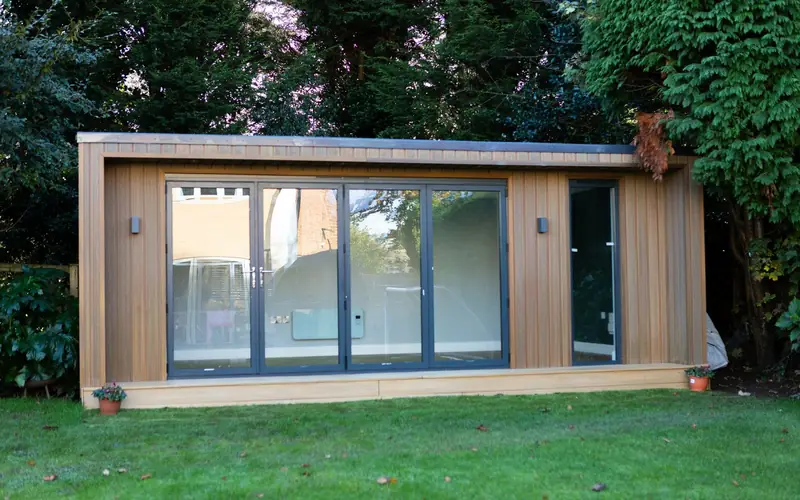
If you want a space that’s separate from the house, such as an office, gym, studio or somewhere quiet to get away, a garden room is usually the simpler choice: it rarely needs planning permission, the work happens at the bottom of the garden, and ours take about 3 weeks to install. If you need the space to be part of the house, such as a bigger kitchen, an extra bedroom or a bathroom, an extension is the right answer.
We specialise in garden rooms, but we’ve tried to be fair about both. Here’s how they compare on the things people ask us about most.
Garden room vs extension at a glance
| Compared on | Garden room | Extension |
|---|---|---|
| Planning permission | Often no planning application, under permitted development. It has to be single storey, behind the front of the house and no more than 2.5 metres high within 2 metres of a boundary. | Often no planning application, under permitted development. A single-storey rear extension can go up to 4 metres beyond the back wall of a detached house, or 3 metres for other houses. |
| Building regulations | Usually not needed. They don’t normally apply to a detached garden building under 15 square metres with no sleeping accommodation. | Most extensions need building regulations approval, according to the Planning Portal. |
| Disruption at home | Built away from the house, so your home carries on as normal. Nobody needs to knock through a wall. | Building work on your house. An outside wall is opened up to join the new room on. |
| Time on site | Ours take about 3 weeks to install, from start to finish. | More stages, including foundations, the structure, the knock-through and the finishing inside. Ask your builder for a realistic timetable. |
| What it can be used for | Things that go with living in the house: a home office, gym, studio, playroom, cinema room or somewhere to relax. A bedroom, bathroom or kitchen needs planning permission. | Anything a room in your house can be, including a bedroom, bathroom or kitchen. |
Planning permission
Both can often be built without a planning application, under what’s called permitted development. The limits are different, though.
A garden room has to be single storey, behind the front of the house, and no more than 2.5 metres high if it’s within 2 metres of a boundary (up to 4 metres with a dual-pitched roof, or 3 metres with any other roof, if it’s further away). It also has to be used for something that goes with living in the house, rather than as a bedroom, bathroom, kitchen or separate home.
A single-storey rear extension can go up to 4 metres beyond the back wall of a detached house, or 3 metres for other houses. That rises to 8 and 6 metres if the council gives prior approval. It can be no more than 4 metres high, with eaves no higher than 3 metres within 2 metres of a boundary, and the outside materials have to look similar to the house.
For both, extensions and outbuildings together can’t cover more than half the land around the original house. Listed buildings, conservation areas and other protected land have tighter rules for both, so check with your council if that applies to you.
Building regulations
This is one of the biggest practical differences. According to the Planning Portal, most extensions need building regulations approval, which means plans, inspections and a completion certificate from building control.
A garden room usually doesn’t. Building regulations don’t normally apply to a detached garden building under 15 square metres with no sleeping accommodation. Between 15 and 30 square metres you won’t normally need approval, as long as nobody sleeps in it and it’s either at least 1 metre from every boundary or built substantially of non-combustible materials.
Disruption at home
An extension is building work on your house. Foundations go in right next to it, and at some point an outside wall is opened up to join the new room on. If that wall is the kitchen, you may be without a kitchen for a while. If you share a wall or boundary with a neighbour, you may also need to follow the Party Wall Act.
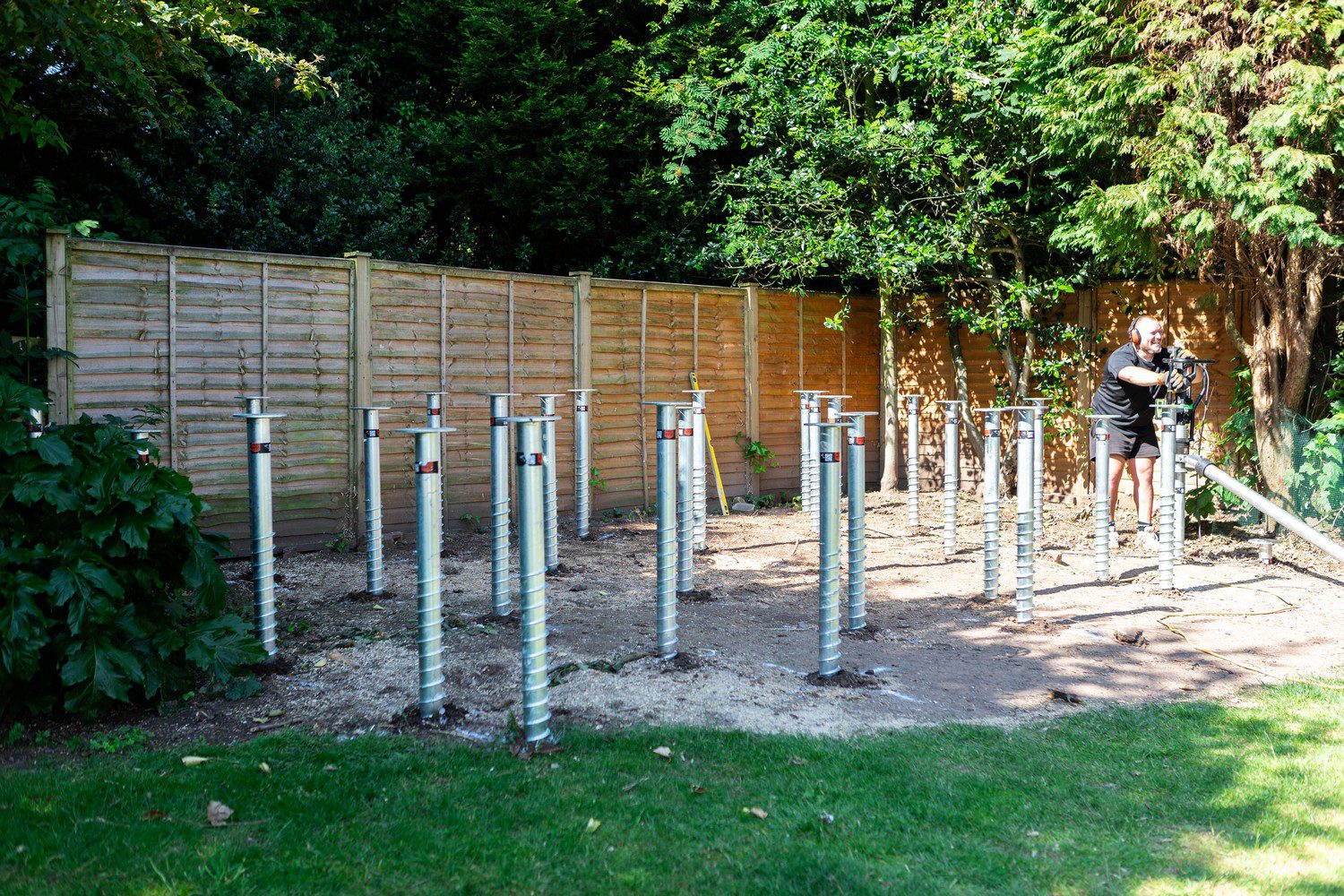
A garden room is built away from the house. We put in the base, either ground screws or a concrete pad depending on your ground, build the room on top and fit it out, while your home carries on as normal. You’ll see us coming and going through the garden, but nobody needs to knock through a wall.
How long it takes
Our garden rooms take about 3 weeks to install, from start to finish. An extension has more stages: drawings, usually building regulations approval, foundations, the structure, the knock-through and the finishing inside. Ask any builder you’re considering for a realistic timetable for your project, including the time before work starts.
What drives the cost
We’re not going to quote extension prices, because every extension is different. What we can tell you is what goes into each price.
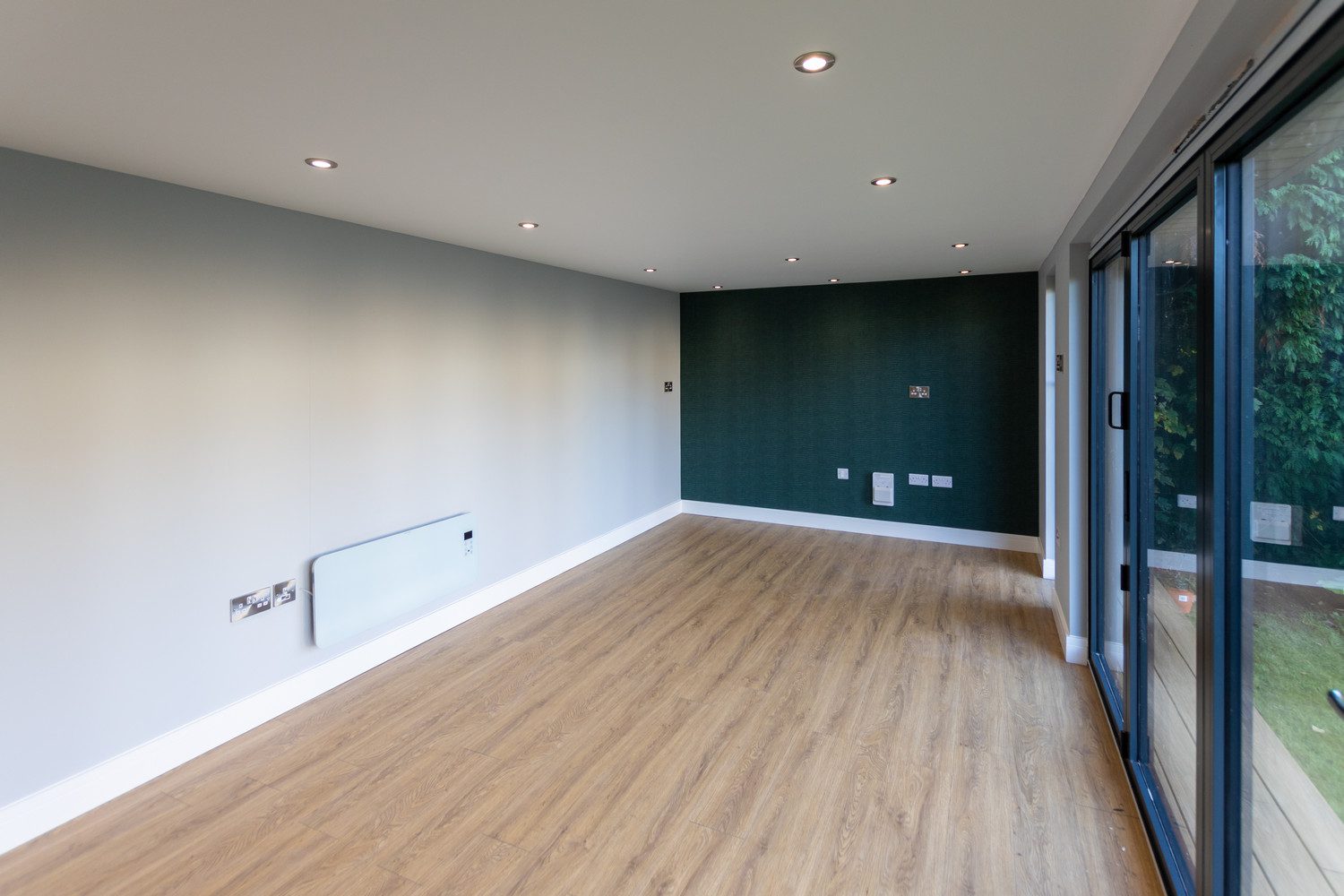
Our garden rooms start from £20,000, and the price goes up with size and specification. Included as standard are the base, installation, electrics, LVT flooring, a wall-mounted heater, plastering and VAT. You get an exact quote after a free design visit, so there are fewer surprises later.
With an extension, the main things that move the price are its size, the foundations, any steelwork to open up the existing wall, matching the outside materials to your house, and fitting out a kitchen or bathroom if it’s going to be one. On top of the build itself there may be fees for drawings, a structural engineer, building control and, if needed, a party wall surveyor. When you compare quotes, make sure you know what’s included in each.
What you can use it for
An extension can be anything a room in your house can be, including a bedroom, bathroom or kitchen. That’s its big advantage.
A garden room under permitted development is for things that go with living in the house: a home office, gym, studio, playroom, cinema room or somewhere to relax. Being a separate building is often the point. Work stays at work, the drum kit isn’t in the living room and the gym doesn’t take over the spare room. The honest downside is the walk across the garden in the rain. If you want a room to sleep in, or a bathroom or kitchen, that needs planning permission.
Value and selling your home
We won’t promise a figure, because nobody honestly can. An extension adds floor space to the house itself. A garden room is a separate building, and how much buyers value it depends on your area, the type of buyer and how well it’s built. A local estate agent is the best person to ask about your street.
What helps either one is quality and paperwork. Our rooms are fully insulated, with 100mm insulated walls, so they’re comfortable all year, and every room is installed by our own team with everything included as standard.
So which is right for you?
Choose an extension if the space has to be part of the house, or if it’s going to be a bedroom, bathroom or kitchen. Choose a garden room if you want a separate space for working, training, making things or relaxing, with less disruption and, in most cases, no planning application or building regulations approval.
If you’re still weighing it up, come and see a finished room at our showroom in Failsworth, look through the garden rooms we build, or try different sizes in our 3D garden room designer. When you’re ready, book a free home design visit and we’ll tell you honestly whether a garden room will do what you need.
Garden room vs extension FAQs
It depends on the size and specification of each. Our garden rooms start from £20,000 including the base, installation, electrics and VAT. For an extension, get quotes from builders and compare what’s included in each.
Most do, according to the Planning Portal. A garden room usually doesn’t if it’s under 15 square metres with no sleeping accommodation, or under 30 square metres and also meets the boundary or materials condition.
Yes. Our rooms are fully insulated, plasterboarded, plastered and painted inside, and come with a wall-mounted heater as standard, so they’re comfortable in winter as well as summer. More answers are on our FAQ page.
